
← Materials hub· CNC turning / mill-turn framing for Kissimmee buyers
What this comparison is for
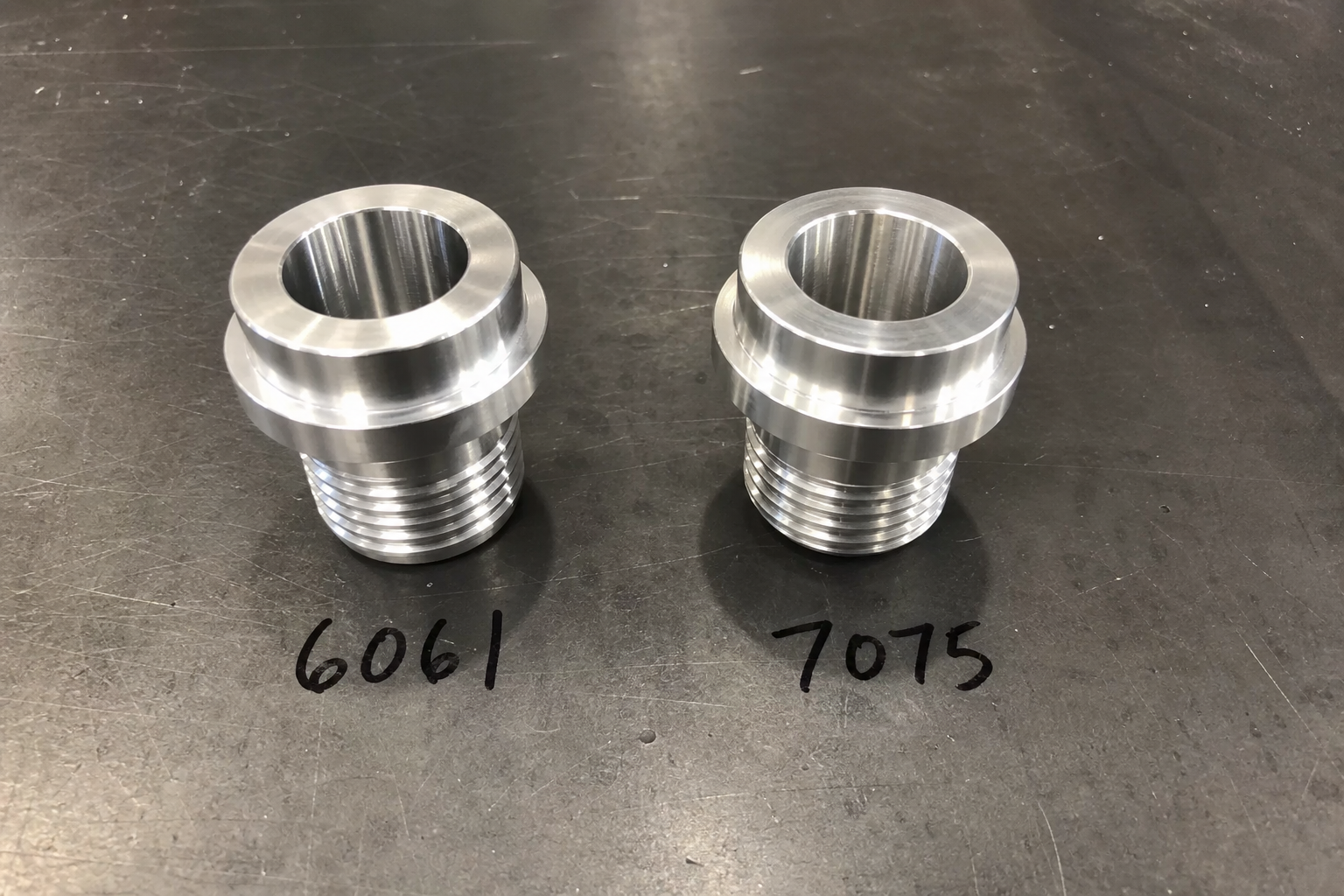
Buyers comparing 6061 vs 7075 usually need a practical starting point for CNC turning or mill-turn round parts — not a metallurgy textbook. Pro-Axis machines aluminum on a multitasking lathe with live tooling when flats, cross holes, or off-center features belong on the same setup.
Use this guide to frame the RFQ. Final grade selection belongs on the drawing and should be reviewed against loads, finish, and cost.
When 6061 is commonly requested
6061 aluminum is commonly requested for general-purpose lightweight parts: bushings, fittings, spacers, and many industrial turned components. It is often chosen when corrosion resistance, weight, and machining cost matter more than maximum strength.
If your print already calls out 6061-T6 (or similar), include that exact callout on the RFQ along with quantity and critical tolerances.
When teams look at 7075
7075 is often evaluated when higher strength is required and the design can accept higher material cost and different machining behavior. It is not automatically “better” — it is a tradeoff.
Tell us why 7075 is under consideration (load, fatigue, weight targets). That context helps quote review stay honest.
Turning and mill-turn notes
Pro-Axis focuses on CNC turning and mill-turn work: round parts processed with live tooling and Y-axis capability when the geometry allows DONE IN ONE style handling reduction. This page is not positioning a standalone multi-axis milling department.
Ready to quote? Send the print, exact aluminum grade, quantity, and any documentation needs.
Return to thematerials commercial hubfor family overviews and the selection matrix.
Quote an aluminum turned part