
← Materials hub· CNC turning / mill-turn framing for Kissimmee buyers
The traditional two-step process
Historically, round parts that needed flats, cross holes, or off-center features were first turned on a lathe, then moved to a separate CNC mill. This required two setups, custom fixturing, and extra handling time.
Every time a part is moved and re-fixtured, there is an opportunity to lose concentricity and tolerance stack-up.
The live tooling advantage
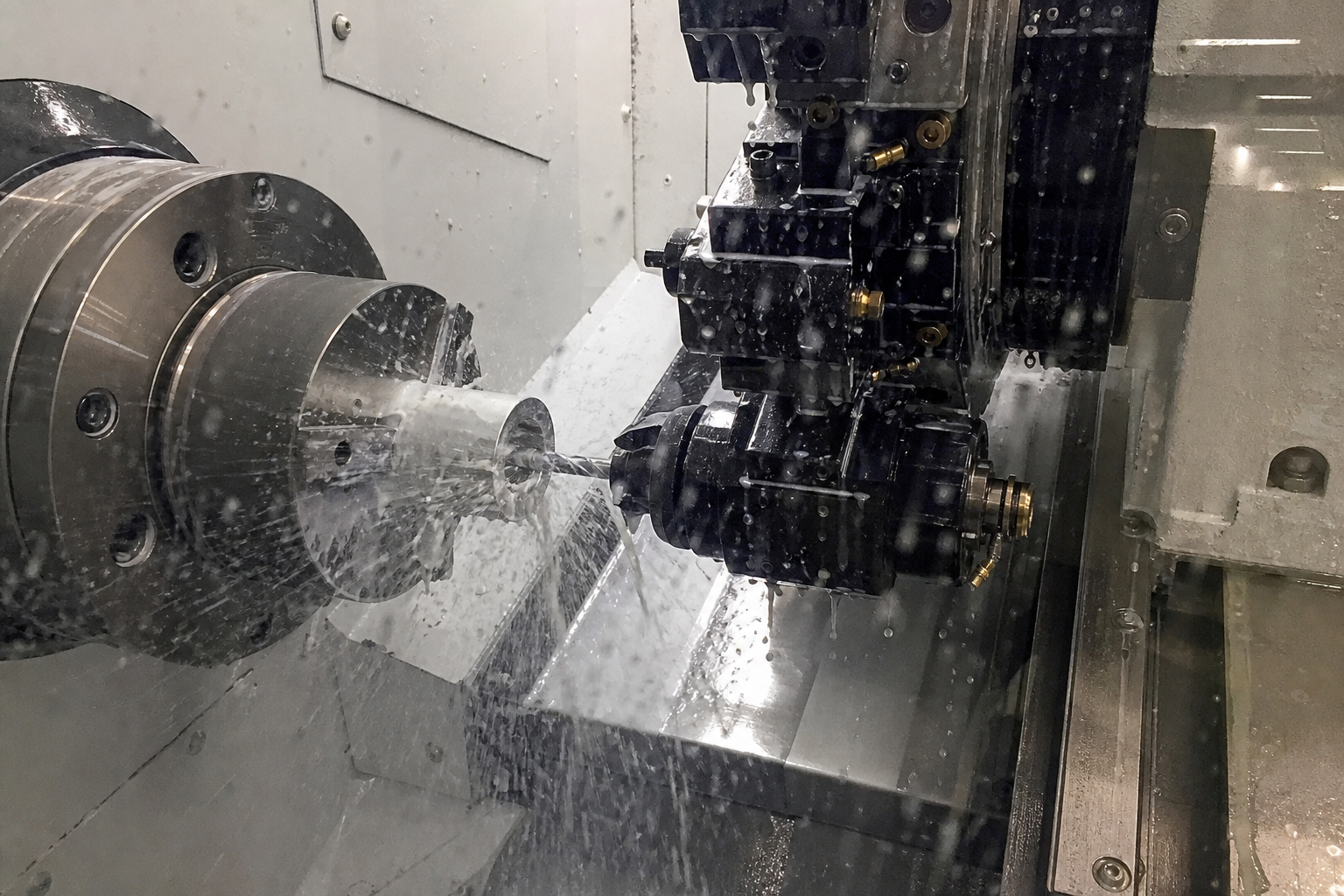
A multitasking lathe with live tooling and Y-axis capabilities allows those milling operations to be performed while the part is still chucked in the lathe.
This DONE IN ONE® approach drastically reduces cycle times, eliminates the queue time between machines, and maintains tighter positional relationships between turned and milled features.
When to specify mill-turn
If your part is primarily cylindrical but includes hexes, slots, cross holes, or off-axis drilled features, it is an ideal candidate for live tooling.
When you submit your RFQ, our quoting team will automatically evaluate whether your part can be machined in a single setup to give you the most competitive pricing and lead time.
Return to thematerials commercial hubfor family overviews and the selection matrix.
Quote a mill-turn part